Seven things that save time, money, and nerves on an island with twenty microclimates
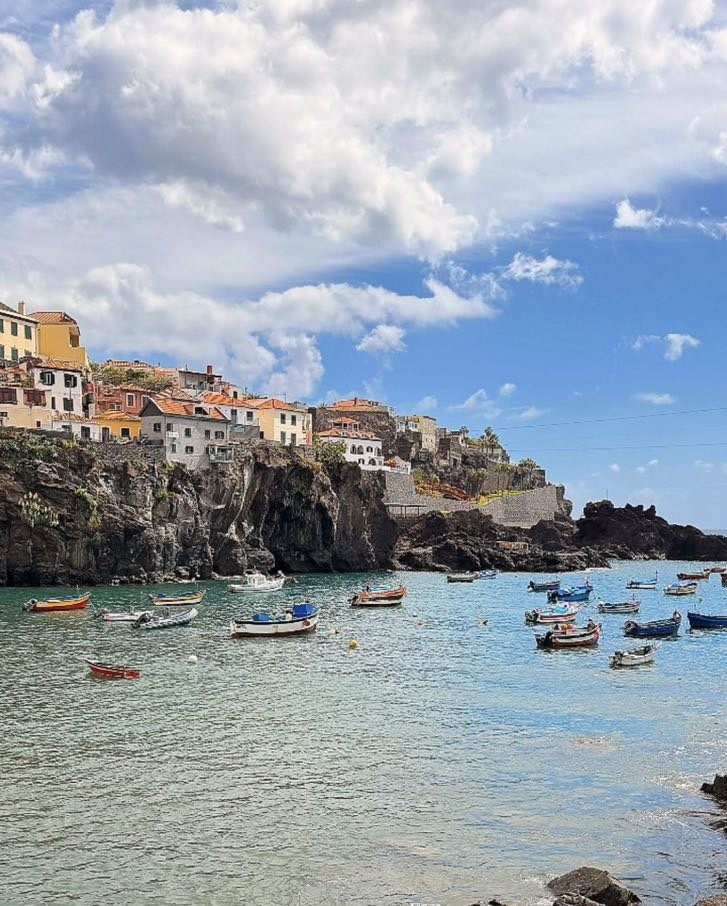
Planning a trip to Madeira? To make your stay comfortable, it’s worth learning a few specifics about the island in advance. I’ve put together practical tips to help you choose groceries and places to eat, figure out public transport, plan routes properly, navigate the changeable weather, and avoid unpleasant situations on the roads.
1. Food and groceries in Madeira: where it’s cheaper to buy food
If you’re planning to stay in Madeira for a long time or simply want to save on food, pay attention to two large supermarket chains: Continente and Pingo Doce. They offer a wide selection of food, drinks, and household goods.
Pingo Doce supermarkets have another advantage: many stores have buffet-style cafés. This is one of the most affordable options for hot meals on the island. Locals eat here, so it’s a good opportunity to try everyday Portuguese home-style food in local company.
My tip
If you want to save on lunches and get to know Madeira’s everyday cuisine, drop by the cafés inside Pingo Doce.
2. Public transport in Madeira: buses, tickets, and timetables
You can travel around Madeira by public transport, but it’s important to understand the routes and timetables in advance.
Buses in Funchal: how to use them and pay the fare
For getting around Funchal, Google Maps is the most convenient. Just enter your starting point and destination. For example, your hotel and Monte Palace. Google Maps will show suitable routes, bus departure times, and necessary transfers.
The timetable at the bus stops can also be useful, but even locals sometimes find it hard to read. That’s why for planning trips within the city I recommend using Google Maps.
You can pay for rides on Funchal city buses in two ways:
- Buy a GIRO travel card in advance. You can top it up and use it for multiple trips. Cards are sold at dedicated service points of the transport company Horários do Funchal in Funchal. One such point is on the first floor of the Anadia Shopping mall. Look for a counter or office with the name GIRO.
- Pay the driver in cash directly on the bus. Bank cards are not accepted on board.
If you plan to use city buses actively for several days, it’s more cost‑effective to buy and top up a GIRO card in advance.
Intercity buses: how to get to different parts of the island
If you want to explore the island by bus on your own, use official timetable sources:
SIGA Madeiraroutes, timetables, and trip planning around the islandRodoesteroutes and timetables of the operator serving the western part of the islandHorários do FunchalFunchal city buses and the GIRO card
Bus route numbers on Madeira were changed recently, so old timetables and information from third‑party sources may be out of date. Check the schedule right before your trip on the official websites.
An important feature of public transport in Madeira: the closer a town is to Funchal, the easier it usually is to get there by bus. Buses between nearby towns and the capital run fairly regularly.
But if you’re planning a trip, for example, to Porto Moniz, Seixal, or Santana, be prepared for far less frequent services. On some routes, buses may run only a few times a day.
Pay special attention to the return timetable
It’s important to know in advance what time the last convenient bus leaves, so you don’t end up in a situation where you arrive at a beautiful spot and then find it difficult to get back by public transport.
3. Weather in Madeira: why you can’t rely on a single general forecast
A forecast for “weather in Madeira” does not reflect the actual conditions in a specific location. This is one of the island’s features that’s essential to consider when planning trips.
Madeira has four climate zones and more than twenty microclimates. The weather can change dramatically behind each mountain ridge. One valley can be bathed in sunshine while the next one over is experiencing heavy rain at the same time. Temperature, wind, and cloud cover can also vary significantly.
For example, on the same day it can be +23 °C, sunny and almost windless in Funchal, but just +17 °C, rainy, and very windy in the Fanal forest.
So check the forecast not for the island as a whole but for the specific places you’re going to visit. If you’re planning a trip into the mountains, a forest walk, or a visit to the north coast, look at the weather for those exact locations.
Storms and weather alerts in Madeira
From November to April, Madeira can experience strong storms, heavy rain, and gusty winds. During such periods, hiking trails, mountain roads, and certain natural areas may be closed.
Before outings, be sure to check:
IPMAofficial weather forecast and meteorological warningsIFCNcurrent hiking trail status: open, closed, and temporarily restricted
Pay attention to the IPMA alert color. Yellow already means potentially hazardous weather conditions, while red indicates a very high level of danger. Follow the recommendations of civil protection services and local authorities.
You must not use a closed trail
Violating restrictions and walking on closed routes is punishable by a fine that can reach 2,500 euros.
Bad weather does not always cover the entire island. For example, when it’s raining in the central and northern parts, the southwest coast may be sunny and dry. So on a rainy day, it’s worth checking the forecast for several regions at once. You may find a suitable place for a walk.
4. Hiking in Madeira: a useful app for independent walks
If you plan to explore Madeira’s hiking routes on your own, I recommend installing the AllTrails app. It helps you study the trail in advance, see its length, elevation gain, difficulty level, photos, and reviews from other travelers.
During the hike, the app shows your location on the map and helps you navigate the route. AllTrails has a free version, and some additional features are available by subscription.
AllTrailsroutes, elevation gain, reviews, and navigation
My tip
Study the trail beforehand, assess not only the distance but also the elevation gain, and always check the official trail status on the IFCN website before setting out.
5. Car rental in Madeira: road and route specifics
Madeira is of volcanic origin. There are almost no naturally flat areas, and the elevation changes can be huge. This is especially important to keep in mind when planning driving routes on your own.
Mountain roads in Madeira: how not to get the route wrong
If you open Google Maps and see a straight road running perpendicular to the ocean, from the coast up into the mountains or, conversely, from the mountains down to the ocean, be especially careful.
Such a road will be very steep and narrow. These are mountain roads with extreme elevation changes where sometimes two cars can barely pass each other. Some sections can be a serious challenge even for an experienced driver. Not every car will handle such climbs or descents comfortably.
The main comfortable roads in Madeira run along the coast through tunnels, and also through the central valley connecting Ribeira Brava and São Vicente.
My tip
If the navigator offers several route options, choose the main roads and tunnels. Don’t focus solely on the shortest distance. In Madeira, a route that looks shorter on the map can turn out to be much more difficult to drive and end up taking longer.
Elevation changes: factor them in even for walks on foot
This feature is important not only for drivers. If you plan to walk from your hotel to a restaurant, beach, or neighboring town, be sure to look at the route profile.
On the map the distance may look quite short, but in reality there may be a very steep climb or descent between the two points. A few hundred meters can sometimes turn into a serious physical challenge.
6. Parking in Madeira: markings, signs, and fines
When renting a car, pay close attention to road markings and parking signs. There are a few key specifics in Madeira.
- White markings with the letter M indicate parking spaces for local residents (Moradores). Tourists are not allowed to use these spaces. Sometimes there is also a corresponding road sign nearby.
- Yellow markings mean no parking.
- Blue parking spaces are usually paid. Payment is made via a parking meter or another method specified for that zone.
- White markings without the letter M often indicate free parking, but in themselves do not guarantee that parking is free. In some places you may still have to pay even in spots with white markings.
Before leaving your car, look around carefully: check the signs near the parking place and find the parking meter if there is one.
The size of the fine depends on the specific violation. From my experience, fines for parking violations can range from 2.50 to 60 euros.
My tip
Always check not only the color of the markings but also the road signs. This will help you avoid fines and unpleasant situations.
7. Roundabouts in Portugal: how to drive them correctly
This is one of the most important points for tourists who rent a car in Madeira. Many drivers used to different roundabout rules make mistakes here, creating dangerous situations on the road.
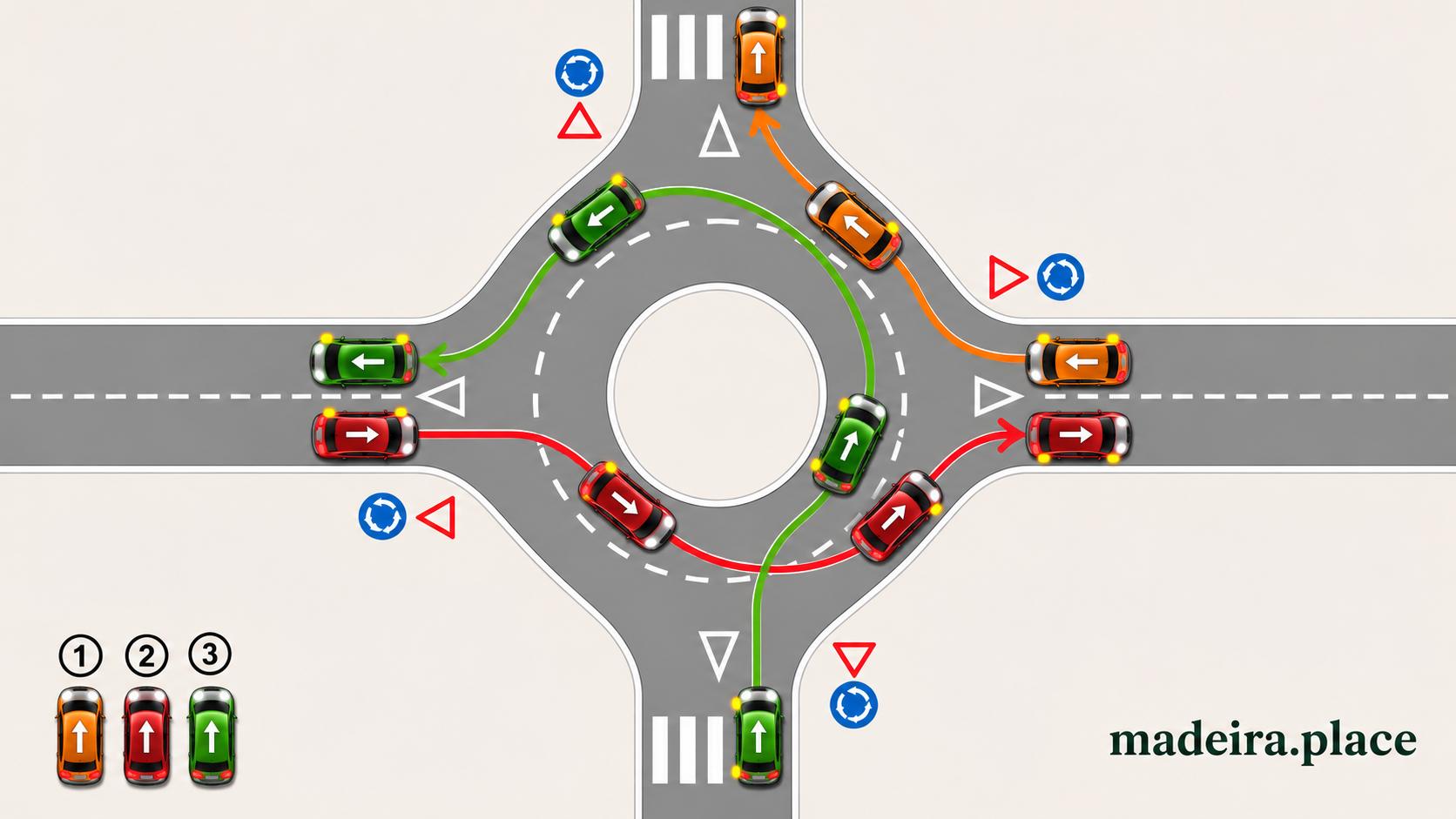
In Portugal, the following rules apply:
- If you need the first exit: before entering the roundabout, take the right lane. After entering, stay in it and leave at the first exit.
- If you need the second or any later exit: use the left lane when entering. Continue driving in the inner lane until you pass the exit directly before the one you need. Then move to the right lane and take your exit.
- Switch on your right turn signal before exiting.
- When entering the roundabout, you must give way to vehicles already circulating on it.
The main rule
If you’re not taking the first exit, you must not cut straight across from the inner lane over the right lane just before your exit. First move to the right lane after the previous exit, then leave the roundabout.
Always pay attention to road signs and arrow markings: on some roundabouts, lane usage may be regulated by additional instructions.
I hope these tips help you prepare better for your trip, feel more confident, and get the most out of your time on the island. Have a wonderful journey and see you in Madeira!